


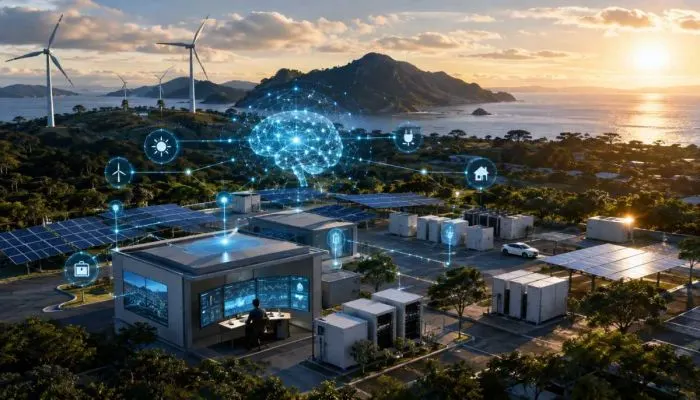
AI Technology for Energy Access: Powering Remote Areas
More than one billion people around the world still live without reliable electricity . This is not just an inconvenience. It affects healthcare, education, and economic opportunity. AI technology for energy access is changing this picture. Artificial intelligence is helping bring power to remote places without building expensive transmission lines.
It is making renewable energy more reliable and easier to manage. It is helping governments decide where to invest limited funds for the biggest impact. AI is not just a tool for rich countries. It is becoming a practical solution for some of the most difficult energy challenges in developing nations.
How AI Is Bringing Power to Remote Communities?
The biggest challenge with rural electrification is distance. It costs a lot to build power lines across hundreds of miles to reach a village of fifty families. AI technology for energy access companies are solving this problem in new ways.
AI-Powered Microgrids
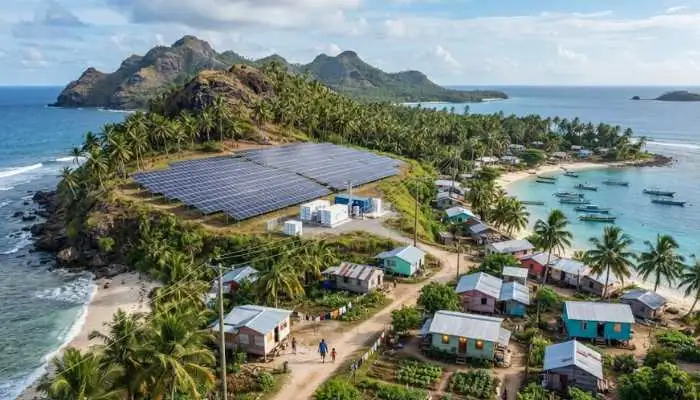
In Indonesia, over 3,000 remote villages have no electricity . These places often have good sunlight for solar power. AI can make solar microgrids work better. The technology predicts how much energy people will need.
It adjusts the storage and distribution to keep costs low . This makes small, local power systems financially viable. AI replaces expensive power lines with smart algorithms.
Read More: How to Improve Energy Access in Remote Areas: Sustainable Community Solutions
Smart Energy Management
Companies are now offering complete "AI energy plus robots" solutions for homes and public spaces . The AI platform looks at electricity prices, your daily habits, and equipment status.
It automatically decides when to charge batteries, when to use solar power, and when to pull from the grid. This creates a closed energy loop for homes . For public transport like taxis and ride-share vehicles, AI monitors battery levels and can even dispatch charging robots to vehicles that need power .
Energy Optimization Using AI
AI is making existing energy systems work better. This is called energy optimization using AI. It means getting more from less.
Making Renewables Reliable
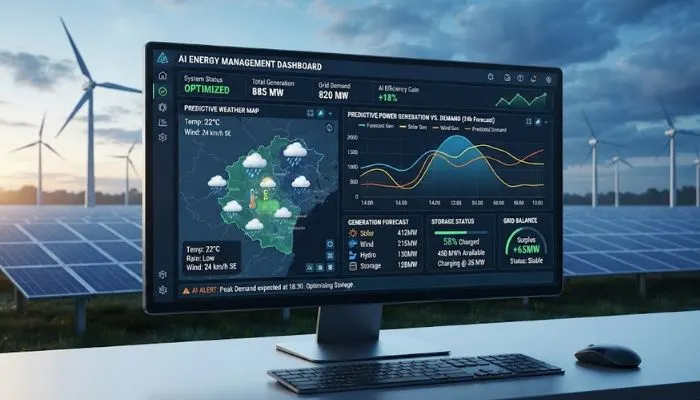
One of the biggest problems with renewable energy is that it is not always available. The sun does not always shine. The wind does not always blow. AI is helping fix this. In China, an AI model runs a massive hydropower, wind, and solar energy base . The AI does not just predict the weather.
It calculates how much electricity the entire river basin will generate over the next few weeks . It looks at rainfall, wind speed, and grid demand. This helps operators keep the power supply stable during hot summers when demand is high .
Autonomous Energy Management
Machine learning is enabling energy management systems that run themselves . These systems do not just follow rules. They learn from data and make smart decisions. They can optimise energy use based on local conditions and regulations.
In areas with lots of renewable energy, the system adjusts in real time to keep the grid stable. This is important for integrating more clean energy into existing power networks.
From Automation to Autonomy
There is a difference between automation and autonomy. Automation means the system follows preset rules. Autonomy means the system decides the best way to achieve a goal .
In a home energy system, automation might mean charging the battery at a set time. Autonomy means the AI decides when to charge based on weather, usage, and electricity prices. It can adapt on its own. This is the future of AI in the energy sector .
You May Also Read: Renewable Energy for a Safer, Prosperous Tomorrow
The Future of AI in the Energy Sector
The future of AI in the energy sector is about two things: smart grids and smart investment.
Smarter Grids
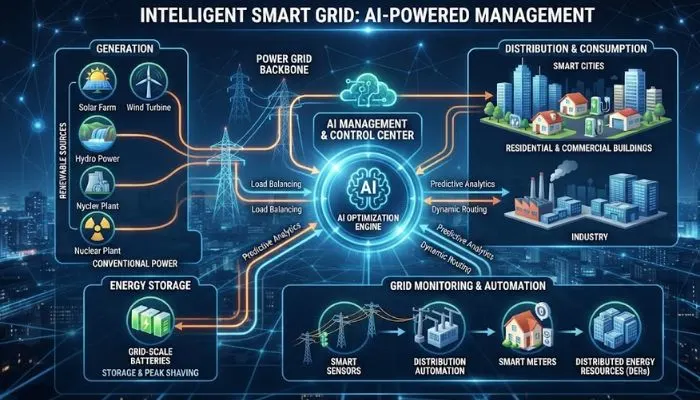
Energy systems are becoming more complex. We have more solar panels, wind turbines, and batteries. Traditional management based on fixed rules cannot cope. AI can handle this complexity.
It can coordinate thousands of small energy devices. It can respond to changes in seconds. In China, the energy sector has already developed dozens of specialised AI models . They cover everything from power grids to oil and gas .
Smarter Investment Decisions
Governments and international organisations are using AI to plan where to invest. The United Nations Development Programme has created tools that use AI and satellite data . One tool maps where clean energy investments can do the most good .
It looks at renewable energy potential, poverty levels, infrastructure, and climate risks. Another tool predicts electricity access up to 2030 at a very detailed level .It can identify which communities are at risk of being left behind. This helps policymakers make fairer, more effective decisions.
FAQs
1. What does AI do for energy access?
AI helps bring power to places that have none. It looks at weather, population, and local needs. Then it figures out the best way to set up solar panels and batteries. It also predicts when people will need electricity most.
2. How do remote villages get power using AI?
They get mini-grids. These are small solar systems with batteries. AI manages them. It decides when to store power and when to release it. This keeps the lights on even when the sun is not shining.
3. Can AI cut costs for energy projects?
It can. Governments have limited money. AI shows them where to invest first. It picks the communities that need power the most. It also designs systems that are not too big or too small. That saves a lot of money.
4. Does AI work only in poor countries?
No. Rich countries use it too. AI helps factories use less electricity. It helps homes run more efficiently. It helps city grids avoid blackouts. The technology works everywhere.
5. Is solar power more reliable with AI?
Yes. Solar depends on the weather. AI forecasts the weather. It knows when clouds are coming. It prepares the batteries in advance. This means fewer power cuts.
6. Will AI run the entire power grid one day?
That is the direction we are heading. AI systems are learning to make their own decisions. They will know when to store power, when to sell it, and when to buy it. Humans will still oversee things, but AI will do the heavy lifting.
7. Which countries use AI for energy right now?
China is a big player. They have built many AI data centres for energy. The UNDP uses AI to map needs in over 100 countries. Companies in Southeast Asia use AI for island microgrids.
8. Does this technology cost a fortune?
The AI part is not that expensive. The hardware is the costly bit. Solar panels, batteries, and cables cost money. But AI makes these systems work better. Over time, it saves more than it costs.
9. Can AI help during storms and floods?
Yes. AI can predict extreme weather. It can tell grid operators to prepare. It can keep batteries charged for emergency services. Hospitals can stay running even when the main grid goes down.
10. How do I know if AI is managing my electricity?
Look for smart meters. See if your provider offers smart thermostats. Many companies mention AI in their marketing. If you have these things, AI is already working behind the scenes.